Orange-backed Robber Fly
S14, Female, Wing Venation

Orange-backed Robber Fly
S6, Male, Face
| Orange-backed Robber Fly S14, Female, Wing Venation | | Orange-backed Robber Fly S6, Male, Face | | ||
 | Class: | Animals (Animalia) - Jointed Legs (Arthropoda) - Insects (Insecta) | |||
| Order: | Flies (Diptera) | ||||
| Family: | Robber Fly (Asilidae) iNaturalist Observation | ||||
| Species: | Orange-backed Robber Fly (Mauropteron pelago) | ||||
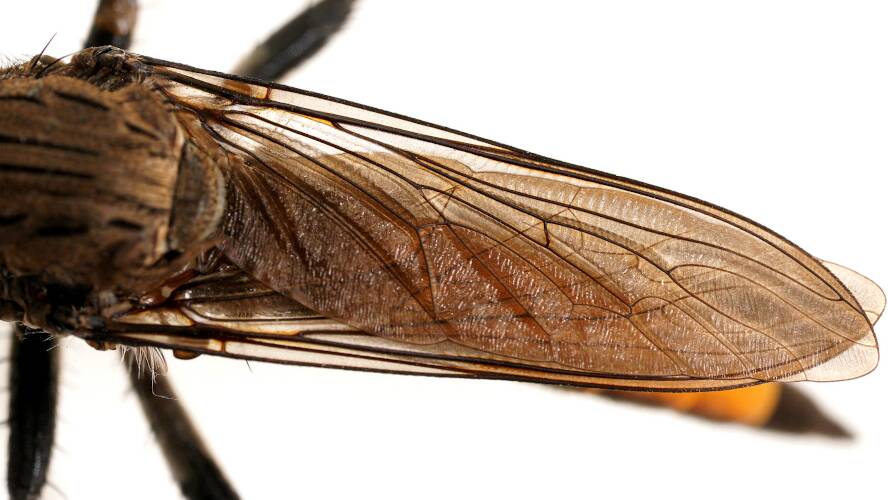
| This Photo: | 🔍S9, Female, Closed Wing Venation🔎 | ||||
Thank you Stephen Fricker, Mark Hura, Dr Chris Cohen & David Muirhead for confirming the id of this species for us General Species Information: Found on Ellura (in the Murray Mallee, SA) and elsewhere Males ~29mm long, females ~34mm long. The genders can be differentiated by the male have a bulbous clasp at the end of it's "tail". The female has a thin posterior to the abdomen. The orange back is surprisingly difficult to see. Obvious in flight if it's below you, or when it's cleaning itself | |||||
| |||||
| |||||